Showing posts with label how to. Show all posts

Saturday, June 25, 2011

what it's like to build: window stop bars

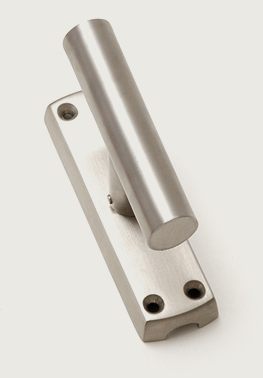
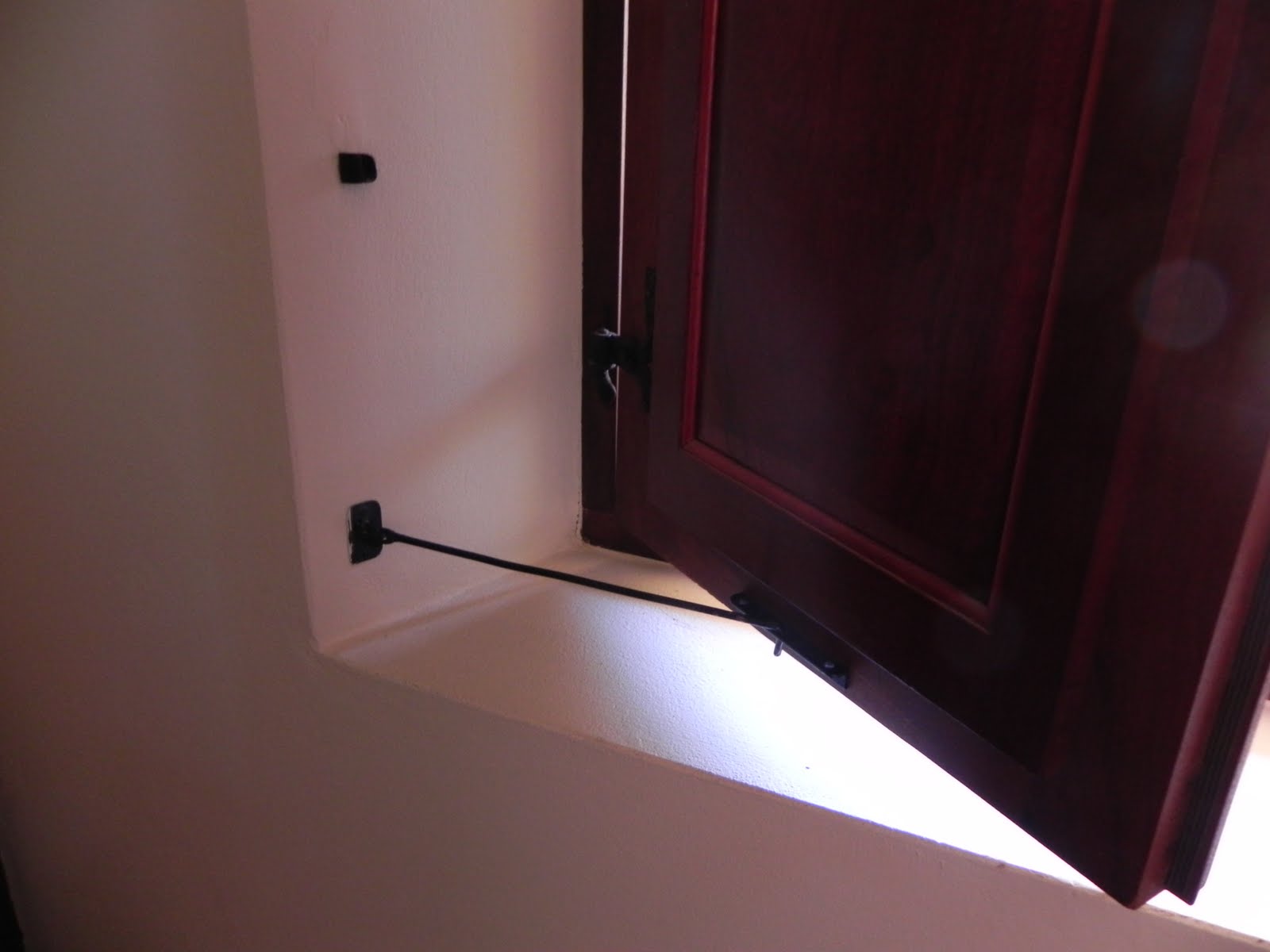
Here's a clever piece of hardware we saw at Hotel Colomé:

window stop bar

Fortunately for us, Norberto Cornejo's construction team built Hotel Colomé & is also building our house, so he's going to obtain & install this hardware on our windows, too.

Thursday, June 23, 2011

what it's like to build: details

The design modifications to our Calchaqui Homes semi-custom-house plans began in March, 2010. We accepted a construction bid from Norberto Cornejo in August. Construction began in September.

By that time Calchaqui Homes had sent us numerous revisions of nearly 100 drawings that specified the detail of our house, including these:
  1. aire acondicionado: air conditioning
  2. antepechos: windowsills
  3. arquitectura: floor plans
  4. baño: bathroom
  5. calefacción: heating
  6. carpinteria: cabinetry
  7. chimeneas: chimneys
  8. cielorrasos: ceilings
  9. columnas: columns
  10. corrientes debiles: Internet, phone, & TV outlets/wiring
  11. cortes: interior cross-sections
  12. escaleras: staircases
  13. estructura: structural supports
  14. gas: gas lines
  15. iluminación: lighting
  16. lavadero: laundry
  17. paisajismo: landscaping
  18. parilla, aka asador: outdoor barbecue
  19. pintura: painting
  20. pisos: floors
  21. pluvial: roof drainage
  22. riego: irrigation
  23. sanitaria agua: clean water
  24. sanitaria cloaca: waste water
  25. solias: thresholds
  26. techos: roofs
  27. toilette: powder room
  28. tomas: electrical outlets
  29. umbrales: thresholds
  30. unifilar topologico: electrical box
  31. vistas: elevations
  32. zócalos: baseboards
We found the amount of detail daunting & wondered how to keep track of it all. How would we even remember what we had decided?

By mid-December we began to create a spreadsheet that would contain everything we knew about the house we wanted built. This task took us nearly a week. We created the spreadsheet as a Google document & shared it with our Calchaqui Homes liaisons & the Cornejo construction team.

We used this incrementally updated spreadsheet as the base document for all our meetings with Calchaqui Homes.

The benefits of the spreadsheet have been great. At all times, we know which design decisions are open & which are closed. By the time our house reached the finishing stage (now), all the decisions have been made.

Below I describe each section of the spreadsheet.

Costs

For our house, the uncovered, aka additional costs above & beyond the construction bid, include these items:
  1. air conditioning
  2. cabinetry that cost more than the builder bid
  3. ceiling fans
  4. granite that cost more than the builder bid
  5. heating
  6. irrigation
  7. kitchen appliances (dishwasher, garbage disposal, microwave oven, refrigerator, stove)
  8. landscaping
  9. laundry appliances (combination washer/dryer, wine refrigerator
  10. lighting
  11. solar hot water system
  12. window stop bars
  13. wood-burning stove
We listed each cost along with this information:
  1. item
  2. brief description
  3. supplier
  4. cost
  5. date we approved the supplier's bid
  6. open issues
Drawings

We listed each drawing & this information about each drawing:
  1. name
  2. brief description
  3. revision #
  4. date we received the latest revision
  5. open issues
Finish Details

Ooh, dauntingly long list: seems like it took forever to make all these decisions:
  1. acequia extensions: locations, materials, shape
  2. air conditioners (artefactos de aire acondicionado): # of units, kCal ratings, locations of interior & exterior units
  3. appliances (artefactos): kitchen, laundry
  4. backsplashes (revestimientos): kitchen, laundry, vanities
  5. baseboards (zócalos): shape, type of wood, wood stain
  6. bathroom tile (baldosa, porcellanato)
  7. bathtub (bañera): shape, size
  8. bidets (bidets)
  9. bridges (puentes) over the acequia: how many, material, shape
  10. cabinet handles (manijas)
  11. cabinets, interior & exterior (carpintería): bathrooms, kitchen, laundry, pantry, linen closet, walk-in closet
  12. ceiling fans (ventiladores): attached light fixtures, heights, locations, models, switch locations
  13. closets (armario, ropero): height of hanging rods, rod material, shelving
  14. countertops (mesadas): bathroom vanities, kitchen, laundry room
  15. door & window handles (manijas) & latches (picaportes)
  16. door keys & locks (cerraduras)
  17. door sashes (bastidores): shape, type of wood
  18. driveway surface (superficie del acceso vehicular)
  19. electrical outlets (tomas): # of outlets per plate, locations
  20. faucets (grifo, grifería): bathtub, bidets, kitchen, laundry room, lavapies (foot-wash), showers, vanities
  21. flooring, interior &amp (pisos); exterior
  22. garden borders: location, material, shape
  23. glass (vidrio): cabinets, doors, windows
  24. hose bibs (llaves)
  25. hot water heaters (caldera, calefón): brand/model, locations
  26. lighting fixtures (artefactos), interior & exterior: heights, locations, switch/plate brand/model & locations
  27. lintels (dinteles): locations, shape, size, type of wood, wood stain
  28. mirrors (espejos): full-length, vanities
  29. paths (senderos): location, material
  30. plants (plantas): list of plants, planting locations
  31. ponds (lagunas): depth, lining, plumbing
  32. radiators (radiadores): # of elements per, brand/model, locations, temperature regulators, zones
  33. roof beams (vigas): shape, size, type of wood, wood stain
  34. screen doors & windows (telas mosquitera): framing, type of screen
  35. shower enclosure (mámpara): material, shape, size
  36. showers (duchas): height of showerheads
  37. sinks (bachas): kitchen, laundry room, vanities
  38. staircase (escalera): banisters, rails, steps
  39. thresholds (solias, umbrales), interior & exterior: materials, shape, size
  40. toilet roll holders (portarollos)
  41. toilets (inodoros)
  42. towel racks (toalleros, perchas)
  43. trellis beams (vigas): shape, size, type of wood, wood stain
  44. window sashes (bastidores): shape, type of wood
  45. windows, fixed (paños fijo) & opening (hojas de abrir)
  46. windowsills (antepechos): shape, size, material
  47. window stop bars
  48. wood stove (salamandra)
For each finish detail we listed the following:
  1. item
  2. specifications including, where applicable, brand & model numbers
  3. date of decision
  4. open issues
Ok, this is very anal, but guess what: we think it's working. Hardly any last minute decisions or missing component schedule delays. When it's over, we'll tell you how it all worked out.

Sunday, June 19, 2011

what it's like to build: carbon footprint

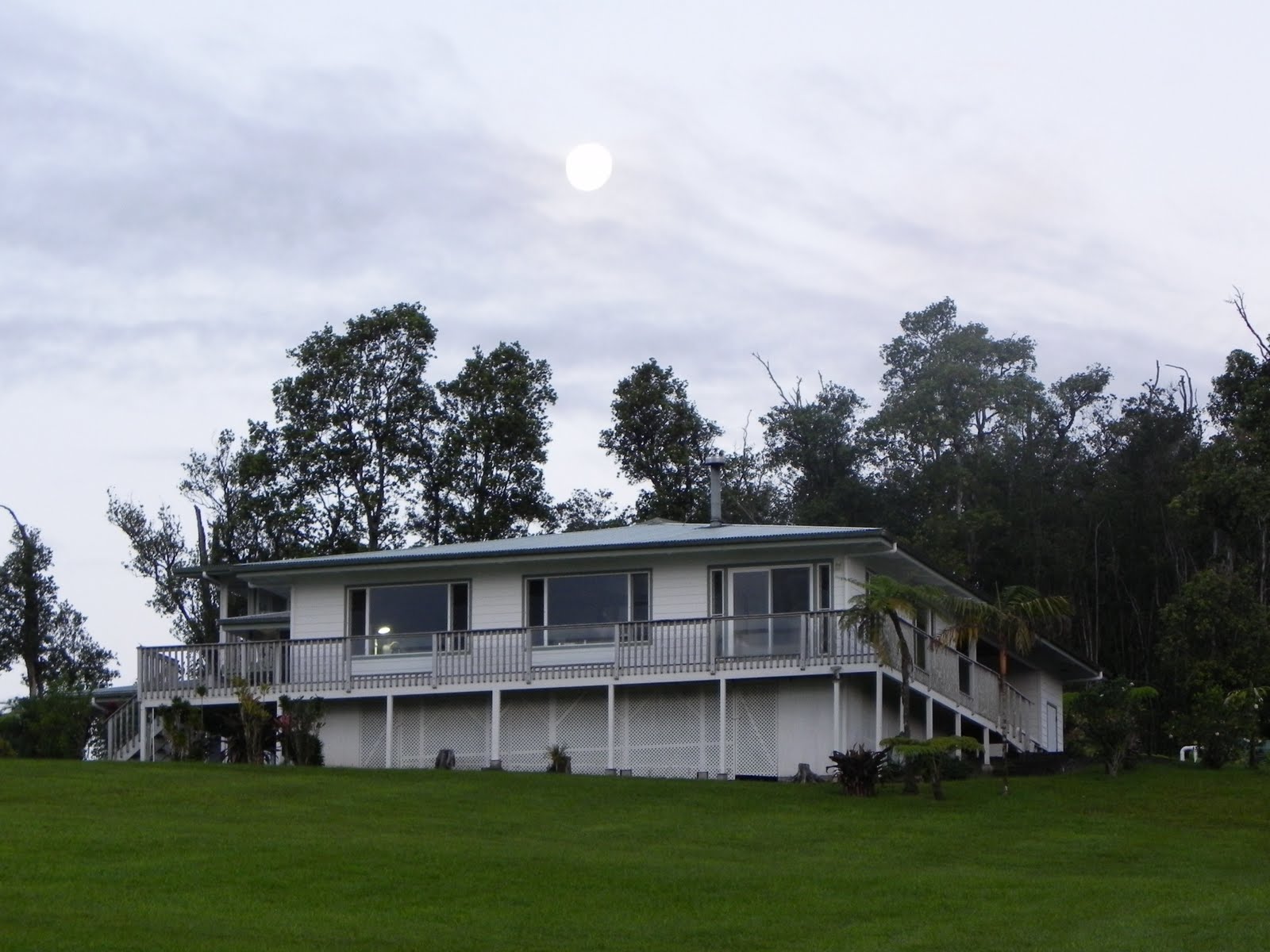
As we have lived for more than 15 years on an off-grid property on the Big Island of Hawaii, we are used to generating a low carbon footprint.

Hawaii house, the east elevation faces the ocean

We live in a passive solar house with big picture windows facing mostly south & east. Louvered windows to each side of the picture windows provide ample ventilation. Most louvers are somewhat open all of the time.

In this mild climate – 60-85F all year long – we don't need heating or air conditioning. The great room has a wood stove that we frequently light on winter mornings or during long rainy days. We have no curtains, only a bamboo pull-down shade in the bedroom & rice-paper shades in the guest bathroom for privacy. These shades are down once or twice a year, maybe.

We collect rain water for drinking & washing. That it rains 250" per year here is a big help.
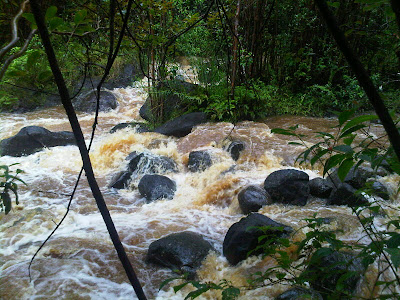
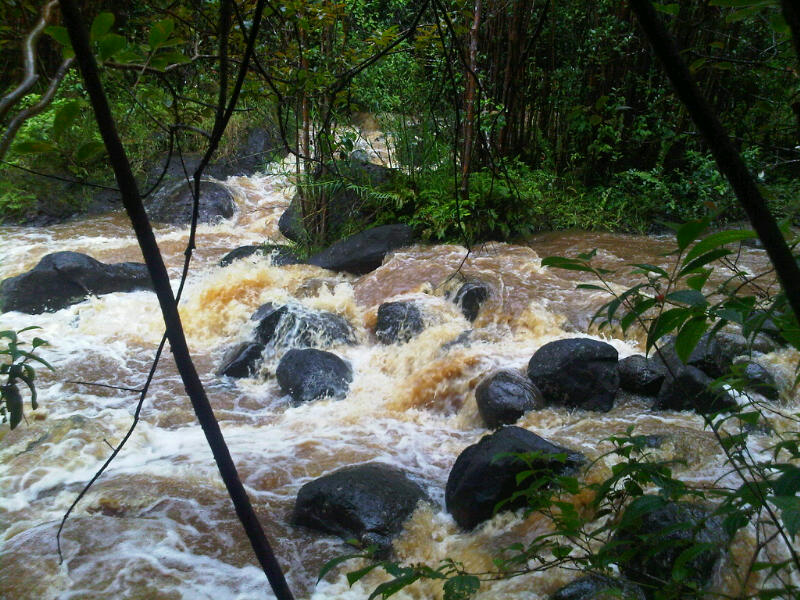
our stream during rain

We generate electric power from the year-round stream that runs through the middle of our property. Back in 1998, we built a hydroelectric system that generates a continuous 700-900W, which easily supplies our needs. Of course we use low-energy appliances, low-energy light bulbs, & we hang-dry our clothes. We use our diesel-powered backup generator when we want to power-wash the decks or use some other a high-amperage power tool for an extended time.

Solar hot water panels on the roof supply plenty of hot water, plus surplus electric power heats an electric element in the water heater. We have a pair of 9-gallon propane tanks that feed the kitchen stove & the instant hot water heater (which is usually isolated, via a valve, from the solar hot water system because the solar panels supply plenty of hot water without this backup heater's assistance).

Naturally we wanted to build a house at La Estancia with a small carbon footprint, although we knew the footprint would be larger than what we're used to.
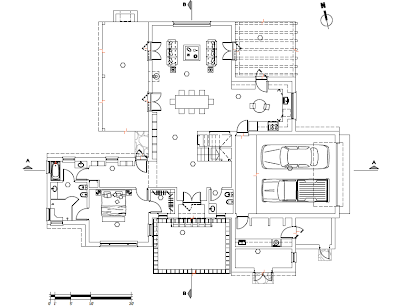
downstairs floor plan of our La Estancia house

Since La Estancia is in the southern hemisphere, we oriented our house north & east this time. Big picture windows or double glass doors face these directions from the great room & kitchen, which are the daytime & evening living areas of the house. The big double doors on the west side are protected from the late afternoon sun by a patio roof. The big picture window in the bedroom faces south & may need curtains for warmth in the winter.

We don't expect to need air conditioning, but we are installing 3 cool-only Carrier units, one in each of the 3 rooms, just in case we need it & also for resale value. More importantly, we have purchased 7 ceiling fans, each with an overhead light: 2 fans in the great room, 2 on the west-facing patio, 1 in the kitchen, 1 in the bedroom, & 1 in the upstairs room.
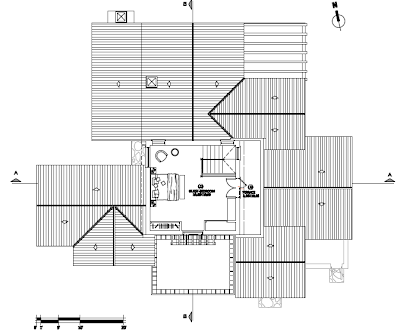
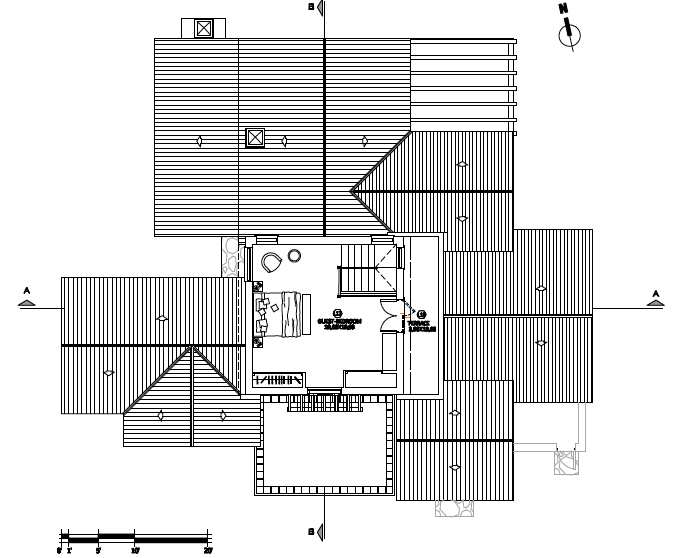
upstairs floor plan of our La Estancia house

For heating, we chose a wood stove in the great room & radiators heated by a gas caldera (furnace). We cut the recommended number of radiators by more than half because it seemed ridiculous to us. The wood stove will create lots of heat in the main living space, which has no interior walls. The smallest room with the most radiator elements is the bedroom. For bathrooms, we have outlets for portable electric heaters if we want them. Upstairs will naturally be warmer than downstairs due to convection, & the windows on all 4 walls will capture all the sun there is.

Limiting electrical use involves lighting, appliances, & behavior. We cut back on the original lighting plan we received so that the interior fixture count is as low as we could make it. In addition, most light switches control only a single bulb, which means that one flip doesn't draw more electricity than required. Ceiling fans & their lights are each controlled by 2 switches: one for the fan, one for the light. All bulbs are compact fluorescent, LED, or halogen. Landscaping lights are solar-powered.

Regarding appliances, we chose appliances with the best low-energy ratings we could find.; we bought a combination washer/dryer but won't use the dryer much because we have a tender outside the laundry room where we will hang-dry our clothes. Our kitchen stove runs off propane.
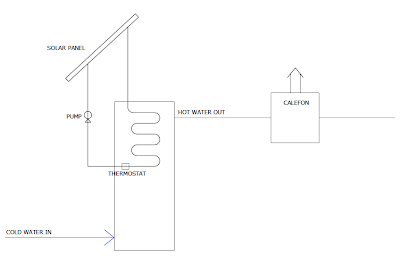
simplified drawing of the solar hot water system

With all the sunny days in Cafayate, solar hot water was a no brainer for us, but we had a difficult time finding a solar installer who shared our solar understanding. Our friends who are right now building a very small carbon footprint in Jujuy led us to Christoph Müller, who has designed & will install a solar hot water system for us.

Our passive hot water tank, which contains a serpentine that acts as a heat exchanger, will sit in our mechanical room. Our two solar collector panels will sit on the north-facing roof of the laundry room. Our calefón (instant hot water heater) will be available to supplement the solar heating during rainy times. Our suspicion is that we will route hot water around, not through, the calefón most of the time because we won't need it.

Originally, we hoped to buy a single, dual-function calefón that would supplement the solar hot water heating & heat the radiators. That turned out to be a contractor warranty nightmare, so we had to back down & buy the second caldera (furnace) to heat the radiators. Perhaps we will go to the original design when we reach replacement time for one or both of the heating units. Of course, we hope both units last forever.
Tuesday, June 14, 2011

what it's like to build: lighting

At some point you'll look at a drawing titled Iluminación (Lighting), which will show you where all the fixed lighting fixtures will be installed in your new home.

Count them. That's how many lighting fixtures you will need to choose & pay for. For our 2,000 square foot house, the number was well over 50, which horrified me – too many!

Mike & I worked the number down below 40. That seemed doable, & what we should have done next was sort the fixtures into types, e.g., exterior ground, exterior sconce, interior hanging, interior sconce, interior cone, etc., & decide which locations could use identical fixtures. For example, we are using one exterior sconce fixture for all the patio sconces.

exterior sconce light
some will be mounted vertically, some horizontally

Had we known to do this analysis & make these decisions, we would have known that we only needed to buy 15 different types of fixture.

Instead, we took our revised lighting plan – 37 fixtures! – to a store that we chose quite randomly on Avenue del Libertador in Buenos Aires. We liked the salesman who worked with us because he figured out quickly what sort of fixtures we preferred (plain, modestly priced) & he didn't push us. The prices seemed very reasonable.

In less than 2 hours we managed to choose most of the fixtures. We forgot about a few, & we made some mistakes about which lights went in open beam ceilings & which went in the flat ceiling under the second floor. All in all, we solved 90% of the lighting problem.

The salesman sent us a quote, we passed that along to Calchaqui Homes, where our liaison helped us complete the order. Because we bought all our lighting in a single store, we realized a 15% discount on the total.

Choosing lighting, like choosing appliances, would have been hard for us to do through an intermediary. If you possibly can, plan to choose your fixtures (& your appliances) during a visit to Argentina. We shopped in Buenos Aires because that's where we were (shopping for granite), but we'll have to pay more for delivery as a result. I imagine (but don't know for sure) that we could have found all the same lighting in Salta.

To see a sample of our lighting fixtures & prices, please visit this post on Cala House blog.

Thursday, June 9, 2011

what it's like to build: ceilings

We chose open beam ceilings throughout our La Estancia house except where the 2nd-story room forced us to have flat ceilings.

The next question was what would go between the beams.

We decided against tongue-and-groove because we've had that in Hawaii for years & wanted a change. We saw the smooth white between-beam ceilings in the Heath Club, liked them, & asked for the same.

Our builder told us how he liked to build such ceilings so that they will not develop cracks caused by expansion & contraction, showed us an example in progress at a Cafayate winery, & we agreed that he should use this technique for our house.

First they raise the beams:

bedroom & hall beams

Then they layer 2 types of mesh over the the beams. One is a very wide metal mesh. The other is a much finer mesh, not sure whether the material is metal or something else:

2 layers of mesh laid on top of the beams

Over the two layers of mesh, they pour a mixture of concrete & small styrofoam balls. It's the styrofoam expanding & contracting that prevents the ceiling from cracking when the temperature changes:

looking down at concrete-with-styrofoam over mesh over beams

looking up at concrete-with-styrofoam over mesh over beams

Stay tuned to see how they finish the ceiling interior.

Thursday, April 21, 2011

what it's like to build: screens

You need them. The flies & mosquitoes are annoying, & mosquitos can carry dengue fever. Paraguay is currently suffering from its most severe dengue fever epidemic in a decade.


fibra de vidrio = fiberglass
tela metálica o plástica que cubre las puertas y ventanas = metal or plastic screen that covers doors & windows
tela mosquitera = mosquito screen

Many Argentines don't use screening. Instead they use Raid, &/or they keep small pots inside the house in which they put fly poison in the morning & mosquito poison at night.

Other Argentines use aluminum screening, which is silver & comes in various hole sizes. The silver reflects the sunlight, which is annoying, so they sometimes spray paint the screening black. Our construction engineer swears that the paint does not fill the screen holes.

In our .com.ar Googling, we found aluminum, galvanized, plastic, & fiberglass screening.

fiberglass screening

In particular, we found rolls of gray fiberglass screening, which is what we use in the United States. Apparently this fiberglass screening costs 40% less than aluminum screening. We will be using this, unless problems are discovered along the way, in which case I will update this post.

Update: our builder found the fiberglass screening to be inadequate, so we are going with aluminum screen that will be spraypainted black. Stay tuned to learn how this turns out.

Monday, April 11, 2011

world's tallest Lego tower

[from Tafline Laylin @ Inhabitat, 11 April 2011]

Brazil Breaks Chile’s Record for the World’s Tallest Lego Tower


Here at Inhabitat, we’ve got a whole lotta Lego going on, but even we couldn’t come close to Sao Paulo’s love for the colorful building blocks. Breaking last year’s record set by Chile, Brazil built the world’s largest Lego tower over the weekend. It took four days to assemble 500,000 Lego pieces that were used to construct a 102 foot, three inch high tower. The independent Lego bricks were stacked using a crane, while wire supports were used to keep the tower from toppling over. Building Lego towers became popular in 1988 when London built the world’s first. Since then, Toronto, Sydney, Tokyo and Munich have jumped on the bandwagon. What’s next? Maybe Lego towers of epic Saudi proportions?

Thursday, March 17, 2011

what it's like to build: doors & windows

Our door & window questions were about frames, glass, screens, weatherstripping, thresholds, windowsills, lintels & hardware.

algorrobo: an Argentine hardwood
antepecho: windowsill
bastidor: door rail/window sash
cedro: cedar
dintel: lintel
DVH, aka doble vidriádo hermético: double-pane glass
hoja: sash piece, window pane
laja: flagstone
madera: wood
marco: door/window frame
quebracho: an Argentine hardwood
sello: weatherstripping
tela mosquitera: screen
umbral: threshold
vidrio: glass

bastidores (rails/sashes)

Madera (wood) or PVC? Possible woods include cedro (cedar) (medium hard) & algarrobo (very hard). PVC is what we call vinyl in the US.

Wood suffers from swelling & shrinking in the Cafayate climate. If bastidores (door rails/window sashes) are not sufficiently thick & wide, the bastidores will warp. Individual rails/sashes should be 10 cm (4") wide, which reduces vidrio (glass) size.

For example, we wanted our doors to have a single hoja (pane) of glass from bottom to top rail, but our builder advised against. We went with a smaller glass pane at the bottom, another rail, & a larger pane at the top.

PVC (aka vinyl) is stable in the Cafayate environment. Most installations we've seen use brown/wood-colored PVC. The bastidores (frames) are smaller, which allows the glass to be larger. PVC looks similar to but not quite like wood.

We chose wood, but if we had the decision to make again, we might go with PVC.

I discuss door & window hardware choices in this previous post.

vidrio (glass)

From the start, for insulation against heat & cold as well as to keep the polvo (dust) out, we specified what we call in the US double-paned or double-glazed glass.

Unfortunately we didn't know the Argentine term: DVH, doble vidriádo hermético. Fortunately, we sorted this out before building began. Cristalizando, a Salta company, is providing the DVH:


The ventana (window) over our stairway will be a custom stained-glass work created by Nadia Khan, an artist who currently lives in the town of Vaqueros, slightly north of Salta.

Some of you may remember two pieces of her work that used to hang in Charlie & April Selman's Colorado Restaurant.

telas mosquiteras (screens)

Insectos (insects), particularly moscas (flies) & mosquitos (mosquitoes), are annoying in La Estancia for some of the year, particularly a rainy year like this past one. Argentines may or may not have telas (screens) on their windows & doors, but we fussy Americans need them.

The screening is metal, not the fiberglass we've become used to. It's also silver colored, which is very visible & reflective in bright sunlight. We're told that the screening can be painted black & thereby becomes nearly invisible. We've not seen a sample of this.

sello (weather stripping)

The insects & dust make weatherstripping on doors very important. We've seen various types of inadequate weatherstripping, but we've not seen good weatherstripping, although I suspect it may be integral & therefore another advantage to PVC doors & windows.

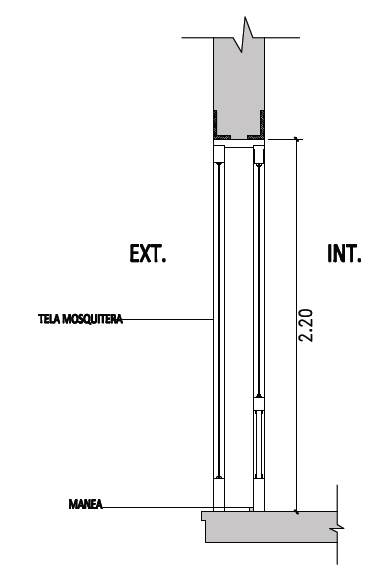
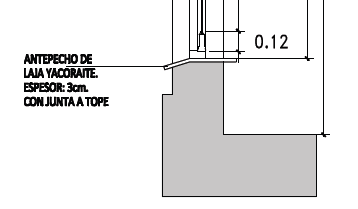
We're taking dust control one step further with a 2-centimeter-high manea (molding) nailed to all four interior sides of the door frame. You can see the manea strip at floor level in this drawing:


umbrales (thresholds)

Stone, wood, tile, none? We've chosen laja yacoraite umbrales for exterior doors


& wood thresholds for some interior doors. Other interior doors, such as the door that leads from the master bedroom to the walk-in closet has the same San Carlos tile running from the bedroom under the door & on into the closet.

antepechos (windowsills)

My criterion for a decent antepecho (windowsill) is that it's wide enough to hold a coffee mug (smoothie glass, beer bottle) on a coaster. Thus, our interior windowsills will be wood & wherever possible, 5" deep.


For exterior windowsills we've chosen the same laja yacoraite we're using for exterior thresholds.

dintel (lintel)

We like lintels, so we're having them over every door & window, inside & outside. Ours will be simple horizontal slabs of quebracho, which is the same madera dura (hard wood) used for beams & patio columns.

Wednesday, March 16, 2011

what it's like to build: keys & locks & handles

People ask me what it's like to build at La Estancia & many more questions about the house design & building process. What are the most important decisions? Why did you decide this versus that? I'm sure people are asking Annette, Beth, Gary, Ginny, Jane, Kent, Penny, & everyone else whose house is finished or underway. So many questions. So many answers.

Over the next few weeks I'm going to post some of the questions we faced & the answers we came to. Everything I say, of course, is completely subjective & may have no relevance for you. Read at your own risk.

I'll begin with a small, simple issue.

What kind of door & window keys, locks, & handles?

bisagra: hinge
cerradura: lock
cerrojo: bolt
llave: key
manija: handle
picaporte: latch
puerta: door
ventana: window

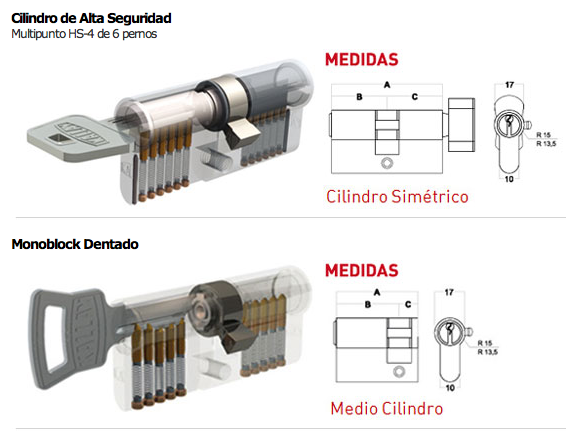
We looked at Argentine door keys: 2.5" long & a separate key for every door, interior & exterior. Not wanting a big llavero (key ring), we looked for a Yale-style key & asked for one key that would fit every exterior door. As is common in most American homes, we wanted interior doors with either no locks or keyless locks.

For exteriors, we found the Kallay marca (brand) of Yale-style keys on the doors of Hotel Colomé:


We saw two choices for closing the screen doors. One is the US type we're used to, an adjustable cylinder mounted near the top of the door. This tends to clog with dust & deteriorate. The other choice is spring-loaded bisagras (hinges), fast or slow. We've asked for the slower model.

Another screen door question is picaporte (latch) or cerrojo (bolt)? We're going with the simple latch. We've no need to lock our screen doors.


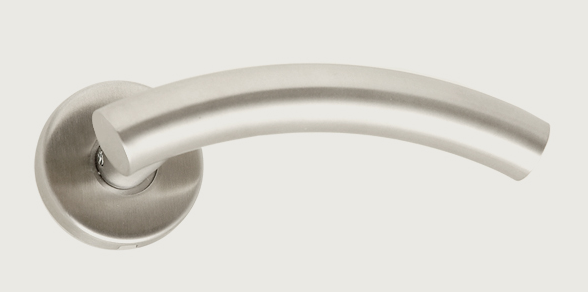
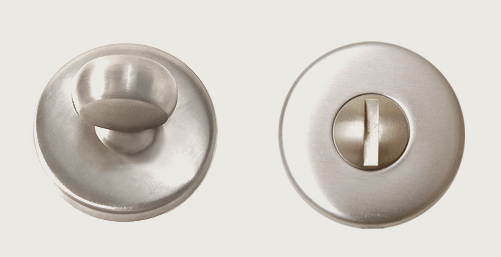
For interiors, we looked first for door handles: not knobs but bars because my arthritic hands don't turn knobs easily. We came across Hal handles & the stainless steel Andina line for door handles, interior door locks, & window handles: